Silver Prices Have Fallen. But Is Silver Actually Cheap?
Silver has had a difficult 2026. I looked at what's happening and whether the recent fall makes it worth buying.

Silver has been all over the news this year.
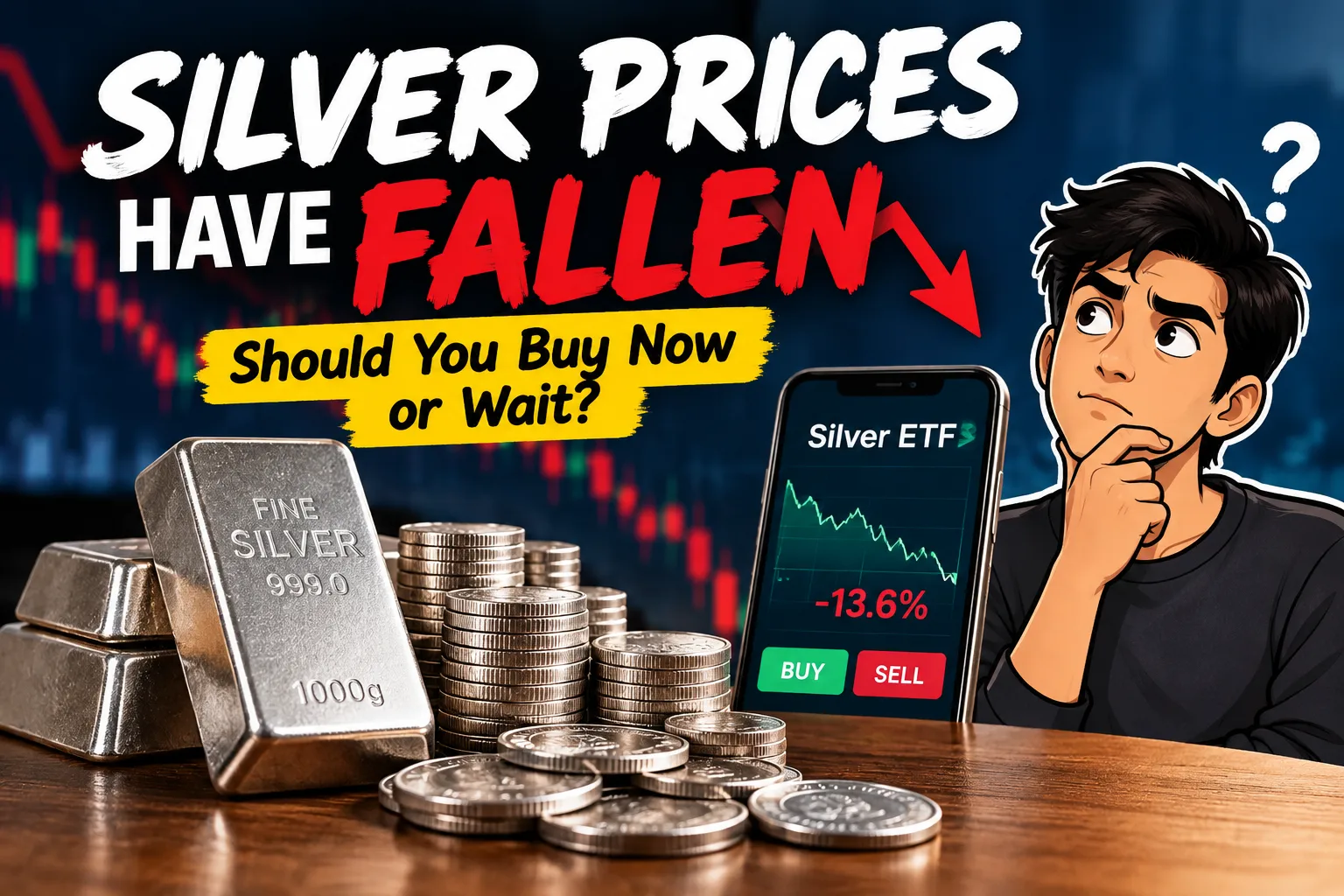
In January 2026, silver touched nearly ₹3.85 lakh per kg in India. By October 23, prices were around ₹1.94 lakh per kg.
That's almost a 50% fall from the peak.
A lot of people who bought silver earlier this year are now sitting on losses.
But there's something interesting about silver that doesn't get discussed enough.
Silver isn't just a precious metal. It's also an industrial metal.
And that makes its price a little more complicated than gold.
Why was silver rising in the first place?
Silver is used in jewellery, coins and utensils. Nothing new there.
But it's also used in solar panels, electric vehicles, electronics and electrical equipment.
With governments investing in renewable energy and companies building data centres, demand for silver has received a lot of attention.
According to the Silver Institute, the global silver market is expected to face a supply deficit for the sixth consecutive year in 2026.
In simple words, the market is expected to need more silver than mines and recycling can supply during the year, with existing inventories helping fill the gap.
Sounds like a good reason for prices to rise, right?
Well, not quite.
The solar panel story has a catch
We keep hearing that solar panels are increasing the demand for silver.
And that's true over the longer term.
But manufacturers have also been finding ways to use less silver in each solar cell.
The Silver Institute expects industrial silver demand to decline by around 3% in 2026, partly because solar manufacturers are reducing silver usage and replacing it where possible.
So even if more solar panels are being installed, that doesn't automatically mean silver demand will increase at the same rate.
I found this particularly interesting.
A growing industry doesn't always mean growing demand for every material it uses.
And that's one reason I wouldn't buy silver based only on the renewable energy story.
So why are prices falling now?
There are several reasons, including changes in global interest-rate expectations, the US dollar and investor demand.
India has another interesting situation.
In May 2026, India restricted certain silver imports. This contributed to shortages and higher local premiums.
But on October 22, Reuters reported that India had approved permits for around 6,500 tonnes of silver imports over the following six months.
More available silver could ease local shortages and reduce the extra premium Indian buyers pay.
That news added to the pressure on silver prices.
But nobody knows whether the current correction is over.
Buying silver? Check what you're actually paying
You can invest in silver in several ways.
Physical Silver
You can buy silver coins or bars from a dealer.
But there's 3% GST on the silver, along with any dealer premium. You may also get a lower price when selling it.
Silver ETF
A Silver ETF holds silver-related assets and aims to follow domestic silver prices.
You buy its units through your Demat and trading account.
It saves you the trouble of storing physical silver, but you pay fund expenses and applicable trading charges.
And there's something important here.
Your Silver ETF Can Cost More Than the Silver It's Worth
Here's something most people don't check before buying a Silver ETF.
An ETF has two prices:
- NAV: The actual value of the fund's assets per unit.
- Market Price: The price you pay when buying the ETF on the stock exchange.
Usually, these prices are close. But during periods of high demand, the market price can be higher than the NAV.
Let's say:
- Silver ETF NAV: ₹100
- Market Price: ₹110
You're paying ₹110 for something currently worth ₹100. That's a 10% premium.
Now, even if silver prices remain unchanged, your ETF could fall to ₹100 if that premium disappears.
That's a 9.1% loss without silver prices falling at all.
And this isn't just a hypothetical situation. Indian Silver ETFs have traded at noticeable premiums during periods of silver shortages and unusually high demand.
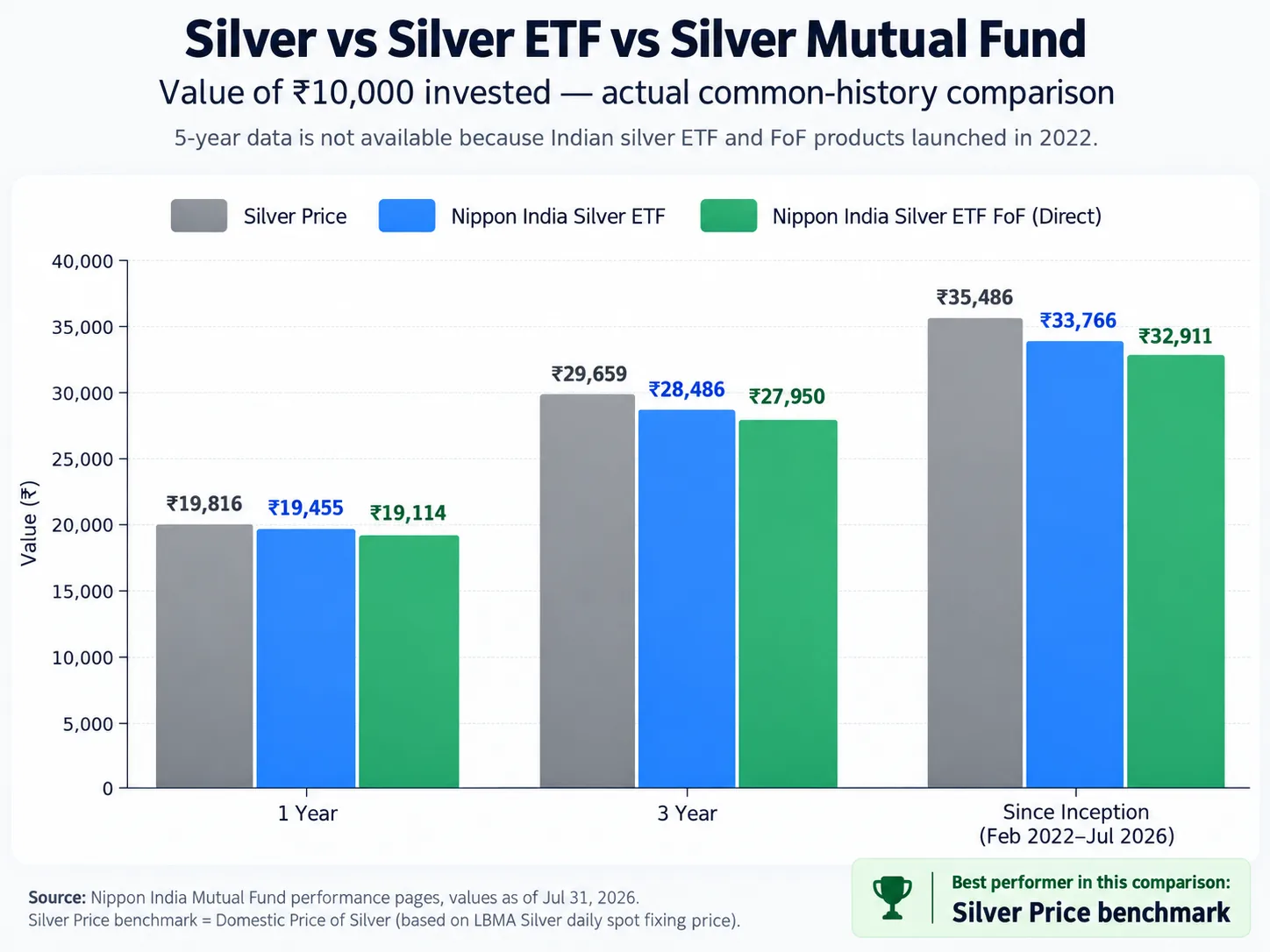
One important distinction: when we compare Silver ETF returns with silver prices, we're usually comparing NAV-based returns against a silver benchmark. Physical silver comes with additional costs like GST and dealer premiums, which aren't included in that benchmark.
My takeaway: Before buying a Silver ETF, compare its market price with its latest NAV or iNAV. Also check trading liquidity and the bid-ask spread.
You can check ETF prices and available iNAV information on the NSE website.
What about Silver Mutual Funds?
There are Silver Fund of Funds too.
These invest in Silver ETFs and don't require you to open a Demat account.
Some also let you invest through SIPs.
But you'll bear the expenses of both the Fund of Funds and its underlying ETF.
Here is what I would check before choosing:
All three give exposure to silver, but their costs and buying processes are different.
Is now a good time to buy?
I wouldn't buy silver just because it has fallen nearly 50% from its peak.
Something that has fallen 50% can still fall further.
And unlike a company, silver doesn't generate profits or pay dividends. Its investment return mainly depends on changes in its price.
That doesn't make silver a bad investment.
It just means we should understand what we're paying for and why we want to own it.
For me, the most interesting part of researching silver wasn't the price crash.
It was discovering how much industrial demand, government import rules and ETF premiums can affect what investors pay.
Before deciding whether silver is cheap, make sure you know which silver price you're comparing.
Sources
- Silver Institute — 2026 Market Outlook
- World Silver Survey 2026
- Reuters — India Approves Silver Imports, October 22
- NSE — Exchange Traded Funds
Disclaimer: This article is for educational purposes only, not personalised investment advice. Silver prices can be highly volatile.
This article is for education only and is not personalised investment advice. Returns shown are illustrations, not forecasts. Rules and rates change, so check the latest information and consider a SEBI-registered adviser for decisions about your own money.
We explain Indian personal finance in plain language, show our assumptions and never take money to recommend a product. Read our editorial policy.