
Health Insurance Explained: Why ₹10 Lakh Cover Doesn't Always Mean ₹10 Lakh Protection
You pay your premium every year. But what actually happens when you land in a hospital?

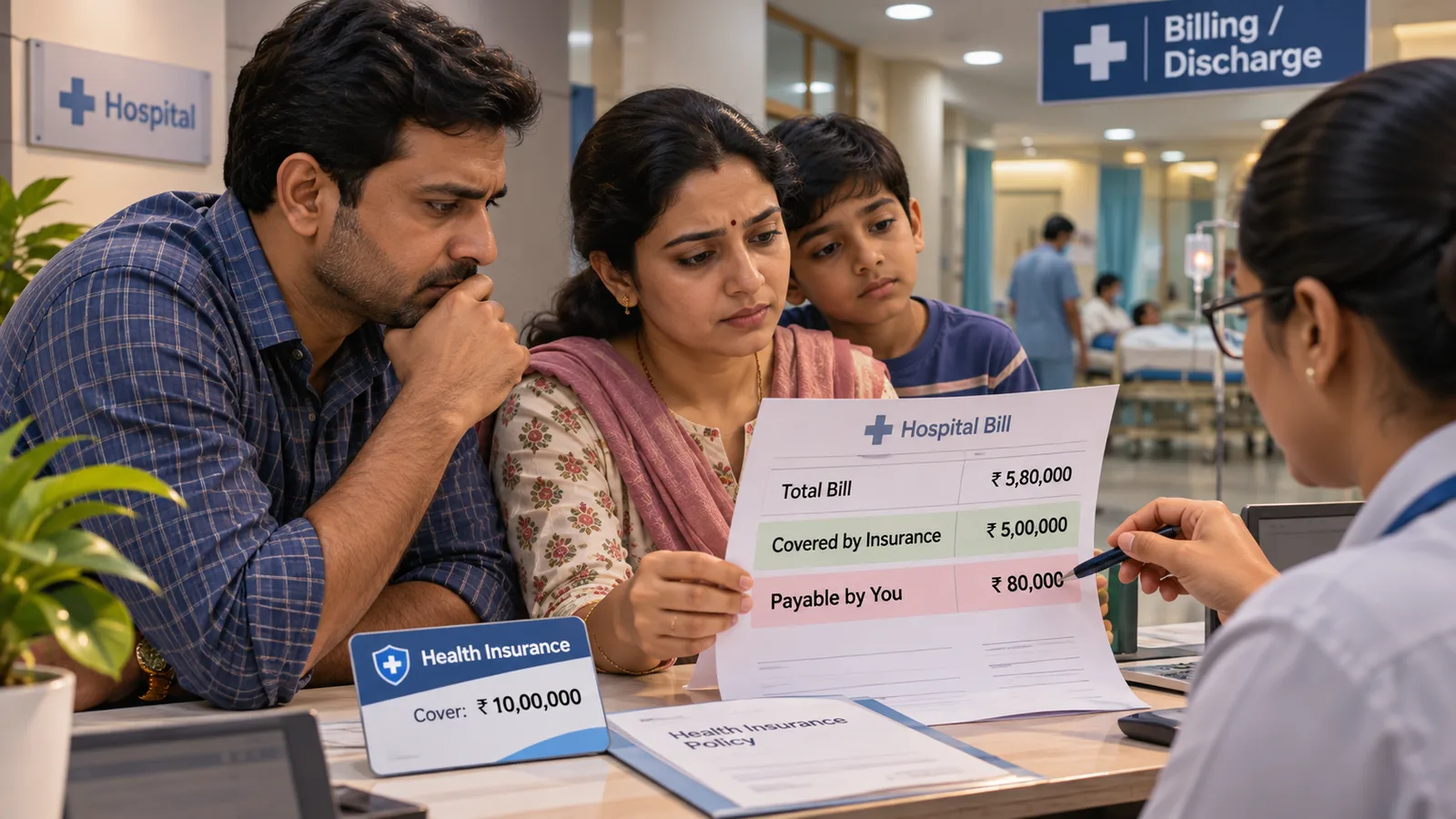
Most of us buy health insurance, pay the yearly premium and forget about it.
Until someone in the family needs hospitalisation.
That's when we discover that having health insurance and having your entire hospital bill paid are two different things.
Let's understand why.
How Does Health Insurance Work?
You pay an insurance company a yearly fee called a premium.
In return, the company agrees to pay eligible medical expenses, up to your policy's coverage limit and subject to its conditions.
Say you have a ₹10 lakh policy.
You get hospitalised, and the bill comes to ₹3 lakh.
If everything is covered, the insurer may pay the entire ₹3 lakh.
Great!
But here's where things get interesting.
Why Might You Still Have to Pay?
Your policy could have something called a co-payment.
A 20% co-payment means you pay 20% of every applicable approved claim.
On a ₹3 lakh eligible hospital bill:
- Insurance company pays: ₹2,40,000
- You pay: ₹60,000
Yes, even with ₹10 lakh coverage!
Some policies also restrict room charges or exclude certain expenses.
That's why the coverage amount alone doesn't tell you how good your insurance is.
How Do You Actually Pay the Hospital?
There are two common ways.
Cashless treatment: The insurer settles approved expenses directly with the hospital. You pay anything not covered.
Reimbursement: You pay the hospital first, submit your bills and documents, and receive the approved amount later.
Cashless is convenient, but it doesn't mean every expense is free.
What If You Never Use Your Insurance?
Here's something I've heard quite often:
"Yaar, paanch saal se premium bhar raha hoon. Ek baar bhi use nahi kiya!"
Well, that's a good thing!
You don't buy health insurance hoping to fall sick.
You buy it so an unexpected hospital bill doesn't wipe out your savings.
But choosing the right policy matters just as much as having one.
In the next article, we'll look at the questions you should ask before buying health insurance and how to avoid policies with expensive surprises.
Disclaimer: Examples are simplified. Actual coverage and claim payments depend on your policy's terms.
This article is for education only and is not personalised investment advice. Returns shown are illustrations, not forecasts. Rules and rates change, so check the latest information and consider a SEBI-registered adviser for decisions about your own money.
We explain Indian personal finance in plain language, show our assumptions, never take money to recommend a product and label any referral links. Read our editorial policy.